
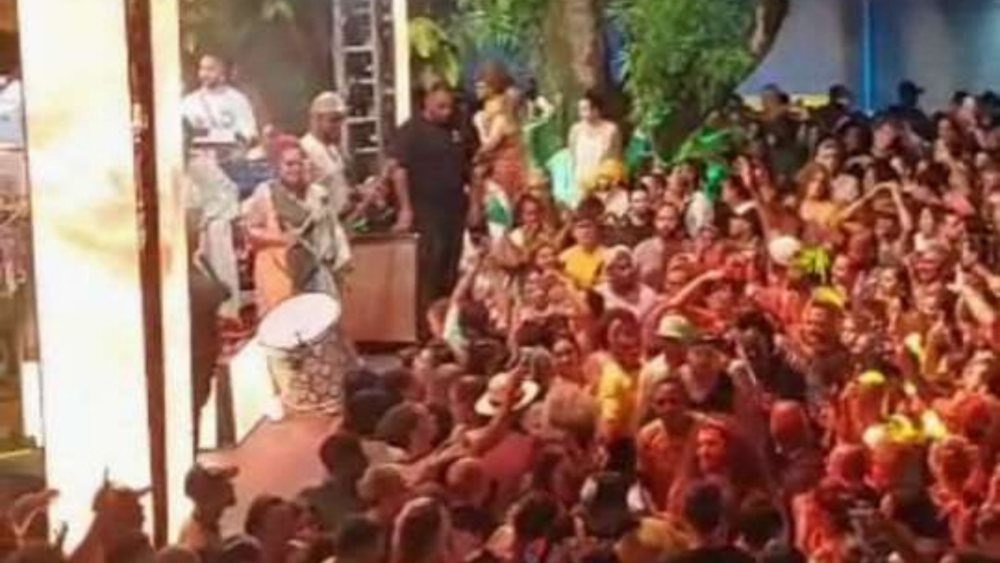
Samba-reggae is a Bahian percussion style and music genre that took shape in Salvador in the 1980s. Born inside the city’s blocos afro — Afro-Brazilian Carnival groups — it fuses the swing of samba with the backbeat of Caribbean reggae, carried by a wall of pitched surdo drums. It is the thunderous sound most people picture when they think of Carnival in Salvador.
Where does samba-reggae come from?
Samba-reggae grew out of Salvador’s blocos afro, the Black Carnival associations that emerged in Bahia in the 1970s and 1980s. These groups formed at a time when Afro-Brazilian communities were reclaiming pride in their African heritage, and their music became a public expression of that movement.
Ilê Aiyê, founded in 1974 in the Liberdade neighbourhood, is widely recognised as the first bloco afro and opened the way for the groups that followed. A few years later Olodum, founded in 1979 and based in the Pelourinho, became the style’s most famous ambassador. The percussionist and music director Neguinho do Samba is generally credited with shaping the samba-reggae sound by blending samba with reggae and other Caribbean rhythms — a way of connecting Bahia to the wider Black Atlantic.
By the 1990s the style had travelled far beyond Bahia. Olodum’s drumming reached global audiences through collaborations with international pop artists, and the image of dozens of drummers filling the Pelourinho became one of Brazil’s most recognisable cultural exports.
What does samba-reggae sound like?
The heartbeat of samba-reggae is a family of surdos — deep bass drums tuned to different pitches. Where a Rio samba school uses surdos mainly to mark the pulse, samba-reggae assigns them interlocking melodic patterns, so the low drums seem to “sing” a bass line together. Over the top, sharp caixas (snare drums) and cutting repiques add drive and syncopation, while the timbau — a tall, hand-played drum — brings solos and heat.
The result is a groove that is both heavier and more danceable than a straight samba: the reggae-influenced backbeat gives it a rolling, mid-tempo swing, and the layered surdos give it its unmistakable power.
Key facts
- Origin: Salvador, Bahia — inside the blocos afro.
- Emerged: the 1980s.
- Roots: samba + reggae and other Caribbean rhythms + Afro-Brazilian tradition.
- Key groups: Ilê Aiyê (1974), Olodum (1979).
- Signature sound: interlocking, pitched surdo drums.
Samba-reggae vs. samba
Samba-reggae is part of the wider samba family, but it is not the same as the samba of Rio de Janeiro. Rio’s samba-enredo is fast, bright and built for the parade avenue; samba-reggae is slower, heavier and shaped by reggae’s backbeat. Both share deep Afro-Brazilian roots, but each carries its own regional identity — samba-reggae is unmistakably the sound of Bahia.
Learning to play it
Because samba-reggae is built from a handful of interlocking parts, it is one of the most rewarding styles for a beginner to learn: master the surdo pulse first, then add the caixa and repique patterns on top, and the whole groove clicks into place. At Opanijé, samba-reggae is one of the core styles taught in our free online percussion course — the same living tradition that fills the streets of Salvador.
Sources & further reading
- Behague, Gerard — writings on Afro-Bahian Carnival music and the blocos afro.
- Crook, Larry — Brazilian Music: Northeastern Traditions and the Heartbeat of a Modern Nation.
- Public histories of Ilê Aiyê and Olodum, Salvador, Bahia.
