Opanije Theme

Custom CSS preserved

Salvador for the Culturally Curious: Where to Feel the Pulse of Bahia

Quick answer

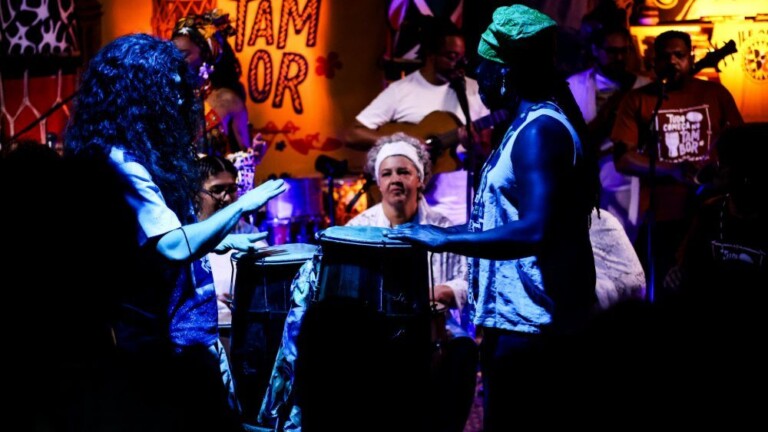
Salvador, the capital of Bahia, is the beating heart of Afro-Brazilian culture — the place where samba-reggae was born and where percussion still fills the streets. For the culturally curious traveller, the rewards are the living traditions: rehearsal nights, Carnival, capoeira circles, sacred festivals, and the food and music of its old neighbourhoods.

A city built on rhythm

Founded in 1549, Salvador was the first capital of colonial Brazil and, for centuries, a centre of the Atlantic slave trade. From that painful history grew one of the richest Black cultures in the Americas. Today the city’s African heritage is everywhere — in its music, its religion, its food and its language — and nowhere more audibly than in its percussion.

Where to feel the pulse

The Pelourinho

The Pelourinho, Salvador’s colonial old town, was recognised as a UNESCO World Heritage Site in 1985 for its historic architecture. Its steep, cobbled streets are also home to the rehearsal spaces of the city’s famous blocos afro, and on certain evenings the whole quarter rings with drums. Rehearsal schedules change from season to season, so it is worth checking locally when you arrive.

Neighbourhoods

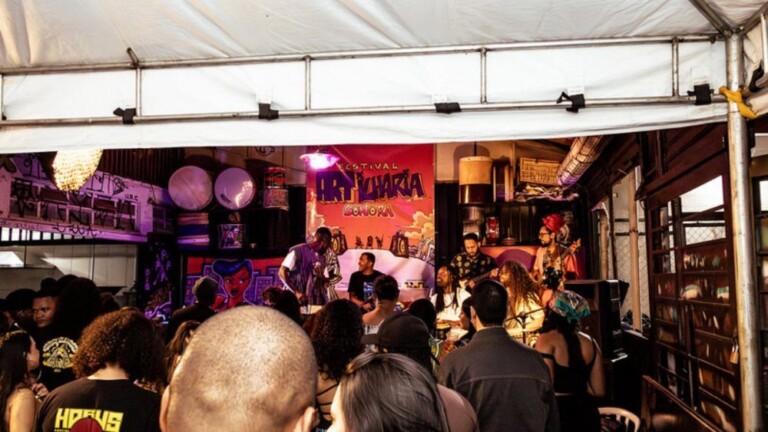
Beyond the Pelourinho, the bohemian Santo Antônio district offers viewpoints over the Bay of All Saints, while Rio Vermelho is the city’s lively hub of bars, live music and the annual offerings to the sea-goddess Iemanjá. The waterfront of the Baía de Todos os Santos frames it all.

Festivals worth planning around

Exact dates shift each year, so confirm the current calendar before you book.

Capoeira, food and everyday culture

You do not need a festival to find culture in Salvador. Open-air capoeira circles — the Afro-Brazilian art that blends martial movement, dance and music around the single-string berimbau — appear in public squares and along the waterfront. And the city’s food is history you can taste: acarajé, the black-eyed-pea fritter sold by the white-clad baianas, and moqueca, a fragrant seafood stew, both carry deep African roots.

Travelling respectfully and safely

Candomblé terreiros are places of worship, not tourist attractions; visit only if invited or on a respectful guided basis, and follow the community’s customs. As in any large city, use ordinary common sense — keep valuables discreet, favour busy, well-lit areas at night, and ask locals for current advice. A few words of Portuguese go a long way, though you will find warmth and patience almost everywhere.

Experiencing it with Opanijé

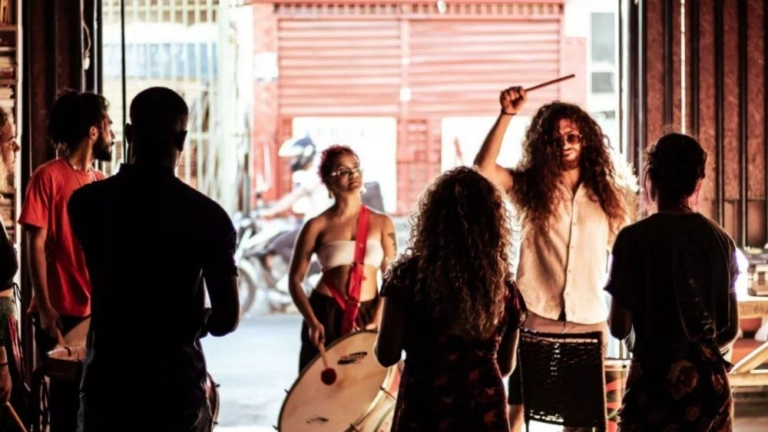
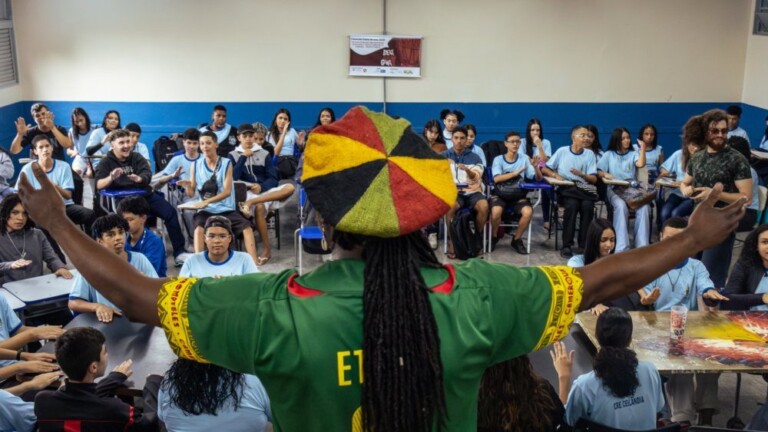
Salvador is the city where Opanijé’s cultural immersion takes place: days of hands-on percussion and living culture, guided by teachers who carry these traditions. There is no substitute for standing inside the sound — but wherever you begin, come curious, come respectful, and let the rhythm lead.

Sources & further reading

  1. UNESCO — Historic Centre of Salvador de Bahia, World Heritage List (1985).
  2. Public cultural and travel documentation of Salvador, Bahia.
  3. Crook, Larry — Brazilian Music: Northeastern Traditions and the Heartbeat of a Modern Nation.

Percussion and Candomblé: The Sacred Roots of Bahian Rhythm

Quick answer

Candomblé is an Afro-Brazilian religion that took shape in Bahia from the traditions of enslaved West and Central Africans. In its worship, sacred drums — above all the atabaques — are not decoration but a means of prayer: specific rhythms call specific orixás. This guide offers respectful cultural and historical context only; the sacred repertoire itself belongs to the terreiro and is learned within the religious community.

What is Candomblé?

Candomblé is a religion of the African diaspora that developed in Brazil, and especially in Bahia, during the era of slavery. Enslaved Africans — drawing on Yoruba, Fon and Bantu traditions — preserved and reorganised their faith in a new land, often under persecution. At its centre are the orixás: ancestral divinities, each associated with forces of nature, colours, foods and rhythms. Candomblé is a living, practised faith today, and it deserves to be spoken about with the same respect given to any religion.

Why drums are sacred

In a Candomblé terreiro (house of worship), music is the language of the ceremony. The atabaques — three hand drums called rum, rumpi and — are played together, the large rum leading, under the direction of a master drummer often known as the alabê. Each orixá has its own toques (rhythms) and songs, and the drums, played correctly, are understood to help call the divinities into the ceremony. The agogô bell frequently holds the timeline alongside the atabaques.

Because these rhythms are sacred, they are learned within the community, over time, with guidance and permission. Out of respect, we do not teach or transcribe the ritual toques; what we share here is context, not instruction.

How Candomblé shaped Bahian music

The influence of Candomblé on Brazilian popular music is profound, even where the music itself is entirely secular. One clear example is the ijexá rhythm: rooted in the worship of the orixá Oxum, ijexá moved from the terreiro into the streets through the afoxés — Carnival groups, such as the famous Filhos de Gandhy, that carry a respectful, ceremonial feel into public celebration. From there its gentle, swinging pattern entered the wider world of Bahian song.

Scholars generally agree that the deep roots of samba, too, run back through Afro-Brazilian religious circles, though the details of that history are debated. What is not in doubt is that the drum traditions kept alive inside terreiros are one of the great wellsprings of Brazilian music.

Learning with respect

At Opanijé we teach the popular rhythms of Bahia — styles such as samba-reggae and the secular, street form of ijexá — and we do so with an awareness of where they come from. Understanding the sacred origins of these rhythms is part of learning to play them honestly. The place to encounter Candomblé itself is the terreiro, on its own terms, as a guest.

Sources & further reading

  1. Matory, J. Lorand — Black Atlantic Religion: Tradition, Transnationalism, and Matriarchy in the Afro-Brazilian Candomblé.
  2. Béhague, Gerard — writings on Candomblé music and Afro-Bahian percussion.
  3. Public documentation of the ijexá rhythm and the afoxé tradition of Salvador.

The Drums of Bahia: A Field Guide to Salvador’s Percussion

Quick answer

Bahian music is carried by a family of drums and percussion, each with its own job: the surdo holds the bass pulse, the caixa and repique cut sharp patterns on top, the timbau brings the solos, and the agogô keeps the timeline. Learn them one at a time and the whole groove of Salvador starts to make sense.

The low end: the surdo

The surdo is the deep bass drum that anchors almost every Bahian ensemble. In samba-reggae, several surdos of different sizes are tuned to different pitches and play interlocking parts, so the low drums together form a rolling bass melody rather than a single beat. If you feel the ground move at a Salvador street rehearsal, that is the surdos talking to each other.

The cutting voices: caixa and repique

The caixa is a snare drum that lays down a steady, driving carpet of sound — the engine that keeps a bloco moving. The repique (also called repinique) is higher and sharper; it is often the lead drum, used to call the group in, cue breaks, and cut improvised phrases across the top of the groove.

The hand drums: timbau and atabaque

The timbau (or timbal) is a tall, lightweight hand drum with a bright, ringing tone. It became a signature of modern Bahian percussion through Salvador’s Timbalada — the band where Opanijé’s own Mestre Junior “Pai de Santo” played timbau in the late 1990s. Played with open hands, it is equally at home holding a groove or firing off a solo.

The atabaque is an older, sacred hand drum central to Candomblé worship, where three sizes — rum, rumpi and — play together, the largest leading. Its rhythms belong first to the terreiro (the house of worship), and we treat that repertoire with respect; the atabaque’s sound and technique, however, echo throughout Bahian popular music.

The timeline and the shakers

The agogô — a double (sometimes triple) bell of West African origin — keeps a repeating pattern that all the other drummers lock onto, a role it plays in both Candomblé and secular Bahian music. Alongside it, shakers such as the ganzá and the frame drum known as the pandeiro add texture and swing.

How they fit together

A Bahian percussion group is a conversation, not a pile of noise. Each instrument has a fixed part, and the music comes alive in the spaces between them: bass surdos underneath, caixa driving the middle, repique and timbau cutting on top, agogô holding it all in time. This is why the tradition is learned drum by drum — once you can hear each voice, you can hear the whole city.

A quick field list

Sources & further reading

  1. Crook, Larry — Brazilian Music: Northeastern Traditions and the Heartbeat of a Modern Nation.
  2. Behague, Gerard — writings on Afro-Bahian percussion and Candomblé music.
  3. Field documentation of Salvador’s blocos afro and terreiro traditions.

What Is Samba-Reggae? The Rhythm That Fills the Streets of Salvador

Quick answer

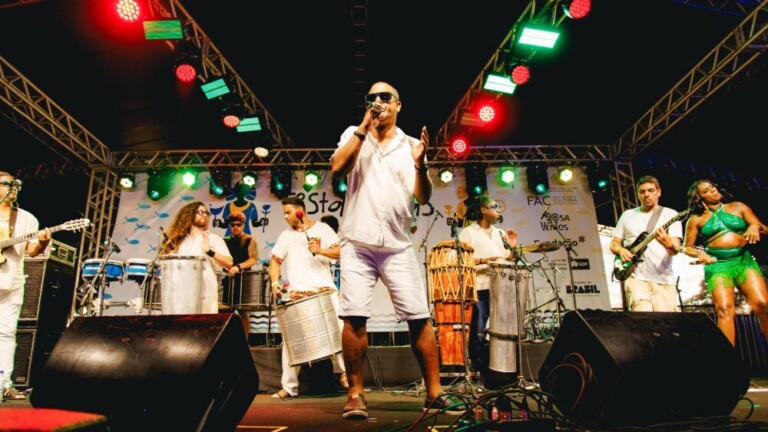
Samba-reggae is a Bahian percussion style and music genre that took shape in Salvador in the 1980s. Born inside the city’s blocos afro — Afro-Brazilian Carnival groups — it fuses the swing of samba with the backbeat of Caribbean reggae, carried by a wall of pitched surdo drums. It is the thunderous sound most people picture when they think of Carnival in Salvador.

Where does samba-reggae come from?

Samba-reggae grew out of Salvador’s blocos afro, the Black Carnival associations that emerged in Bahia in the 1970s and 1980s. These groups formed at a time when Afro-Brazilian communities were reclaiming pride in their African heritage, and their music became a public expression of that movement.

Ilê Aiyê, founded in 1974 in the Liberdade neighbourhood, is widely recognised as the first bloco afro and opened the way for the groups that followed. A few years later Olodum, founded in 1979 and based in the Pelourinho, became the style’s most famous ambassador. The percussionist and music director Neguinho do Samba is generally credited with shaping the samba-reggae sound by blending samba with reggae and other Caribbean rhythms — a way of connecting Bahia to the wider Black Atlantic.

By the 1990s the style had travelled far beyond Bahia. Olodum’s drumming reached global audiences through collaborations with international pop artists, and the image of dozens of drummers filling the Pelourinho became one of Brazil’s most recognisable cultural exports.

What does samba-reggae sound like?

The heartbeat of samba-reggae is a family of surdos — deep bass drums tuned to different pitches. Where a Rio samba school uses surdos mainly to mark the pulse, samba-reggae assigns them interlocking melodic patterns, so the low drums seem to “sing” a bass line together. Over the top, sharp caixas (snare drums) and cutting repiques add drive and syncopation, while the timbau — a tall, hand-played drum — brings solos and heat.

The result is a groove that is both heavier and more danceable than a straight samba: the reggae-influenced backbeat gives it a rolling, mid-tempo swing, and the layered surdos give it its unmistakable power.

Key facts

Samba-reggae vs. samba

Samba-reggae is part of the wider samba family, but it is not the same as the samba of Rio de Janeiro. Rio’s samba-enredo is fast, bright and built for the parade avenue; samba-reggae is slower, heavier and shaped by reggae’s backbeat. Both share deep Afro-Brazilian roots, but each carries its own regional identity — samba-reggae is unmistakably the sound of Bahia.

Learning to play it

Because samba-reggae is built from a handful of interlocking parts, it is one of the most rewarding styles for a beginner to learn: master the surdo pulse first, then add the caixa and repique patterns on top, and the whole groove clicks into place. At Opanijé, samba-reggae is one of the core styles taught in our free online percussion course — the same living tradition that fills the streets of Salvador.

Sources & further reading

  1. Behague, Gerard — writings on Afro-Bahian Carnival music and the blocos afro.
  2. Crook, Larry — Brazilian Music: Northeastern Traditions and the Heartbeat of a Modern Nation.
  3. Public histories of Ilê Aiyê and Olodum, Salvador, Bahia.