
Salvador · Bahia
100% online, at your own pace
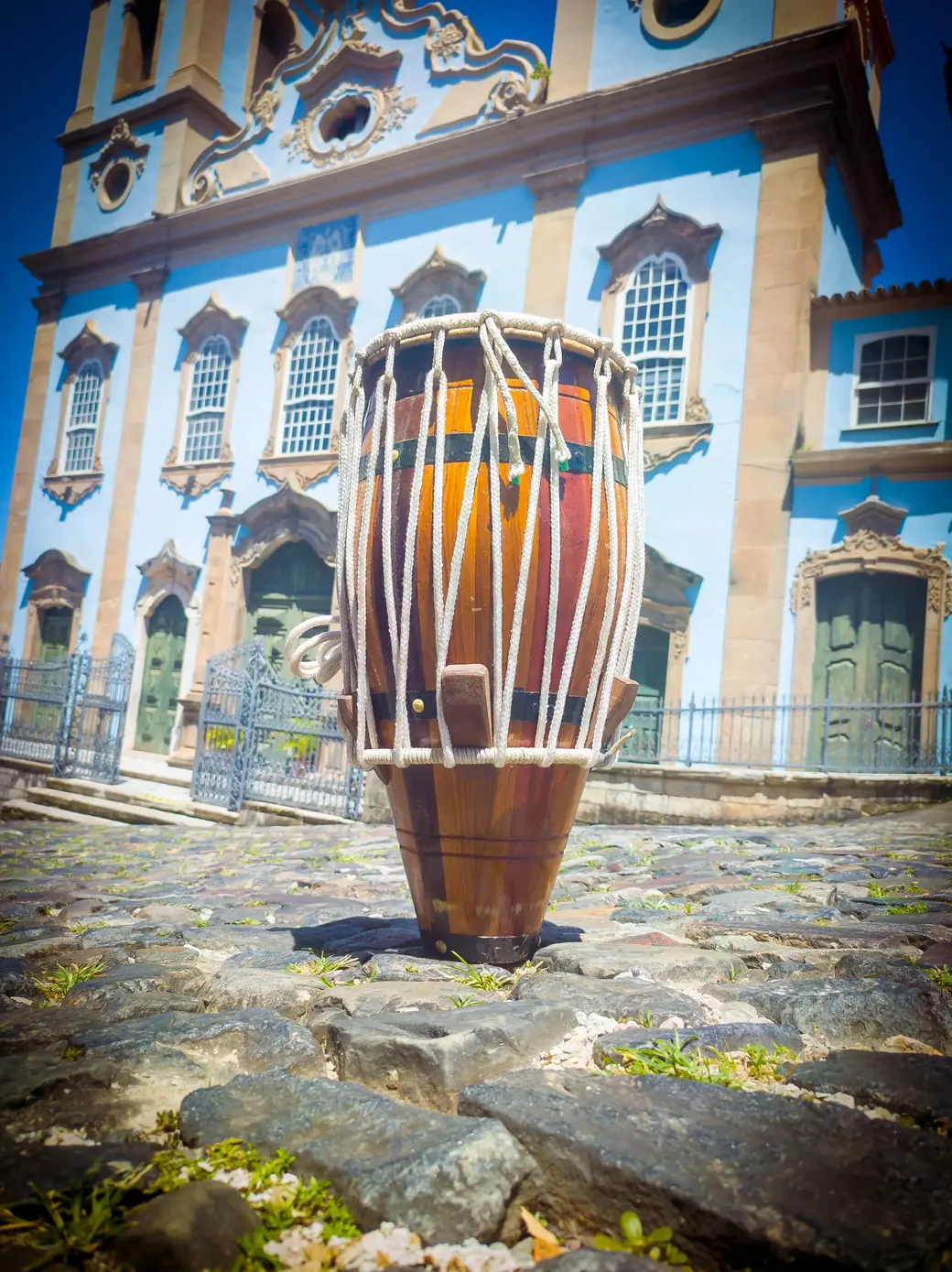
Bahia's drum,
in your hands
The Opanijé Bahian Percussion Course is the complete path, online, with Adson Junior "Pai de Santo" — from first technique to the swing you can't rush.
One-time payment · 7-day guarantee · No subscription
Before you decide
See how the mestre teaches
For now, the lesson comes from our legacy course, which will soon be replaced by the new course. Watch it and see if it's for you.
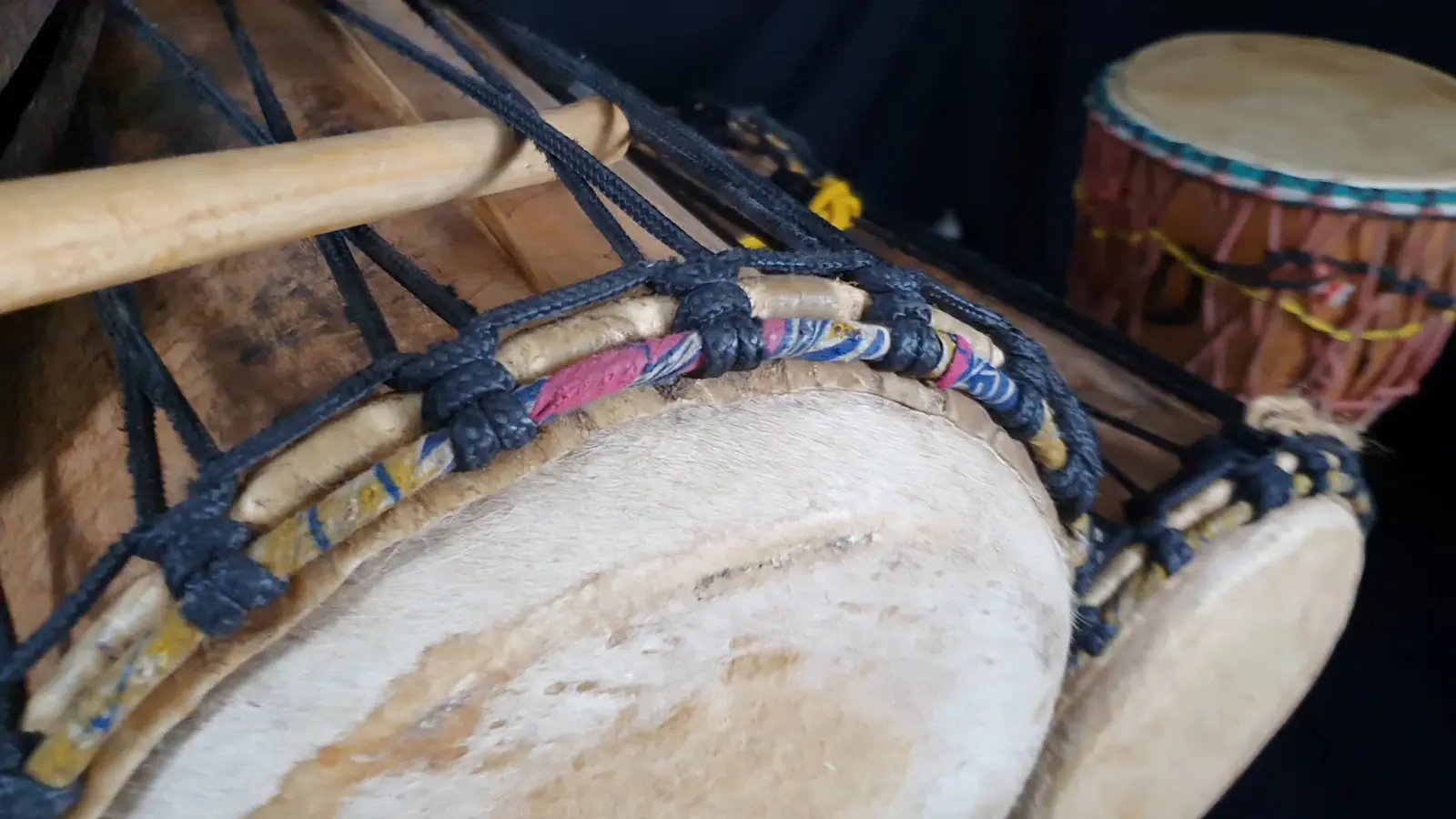 Free lesson · legacy course
Free, on Google Classroom.
Prefer email?
We'll send you the lesson
Leave your email — the link to the lesson arrives in your inbox. That's all.
What you'll learn
A path from the foundation to the swing
The toques
Samba-reggae, ijexá and the toques that travelled from the terreiro to the blocos afro — each with its own history and place in Bahian music.
The instruments
The swing
Playing it right is only the start. This is where swing, dynamics and your ear come in — until the drum speaks for you.
Coordination is taught: each hand comes in at its own time, one step at a time.
Each block has only what it needs.
Who teaches
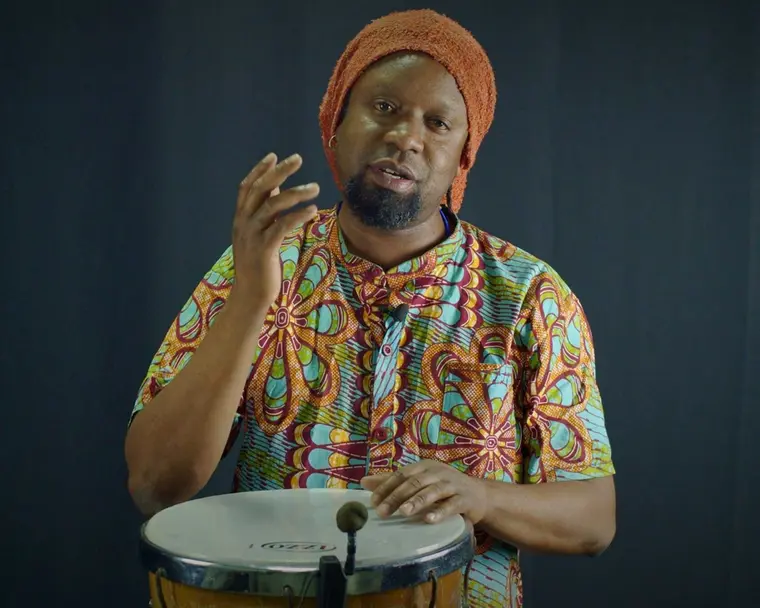
Adson Junior "Pai de Santo"
Bahian mestre · lead teacher · Timbalada, 1996–2000
Adson was born into music: he grew up in Salvador, in a family rooted in African-derived tradition. He started out in the sambas juninos and came up through the tambor do engenho and Olodum — Olodum Mirim, the youth group and the adult band — before joining Timbalada in 1996. His Timbalada friends, above all Carlinhos Brown, gave him the nickname "Pai de Santo": a stage name, not a religious title.
He learned from his older brother, Tinho Pequeno of Timbalada, and from Cabo Del, Morotó, Mestre Prego, Neguinho do Samba, Luizinho do Jêje, Nilton Gago, Valdir Pedra Lascada, Almir Mão de Pedra and Carlinhos Brown.
He has shared stages with Carlinhos Brown, Marisa Monte, Arnaldo Antunes and Olodum. In the 2000s he co-founded the band Baianada with Alexandre Guedes and Wesley (formerly of Olodum). The band later became Motumbá, a name chosen by Adson and Alexandre Guedes, and featured guest appearances by Carlinhos Brown. He lived in Turkey for two years and has performed in 19 countries with the show groups Art Events, Copacabana Show and Brasil Tropical.
He has taught more than a thousand students. In the course, he shows you hand position, timing and the details of each rhythm.
Instagram: @paidesanto_percussao
Where this teaching comes from
Timbalada and tours
The same teaching as the in-person classes in Salvador — recorded and organized for learning from far away.
- Timbalada, 1996–2000
- Stages shared with Carlinhos Brown, Olodum, Marisa Monte and Arnaldo Antunes
- Shows in 19 countries with the groups Art Events, Copacabana Show and Brasil Tropical
Built from years of playing, touring and teaching.
Honest questions
Questions, answered
01 Do I need any experience?
None. The course starts from zero — posture, hands, first exercises — and each module assumes only what the one before it taught.
02 "I'm not musical, and I can't dance"
Perfect. Nobody is born on the beat. The course teaches through the body — guided repetition, no rush, no audience.
03 How much time do I need each week?
The pace is yours — the lessons are recorded and they wait for you. Short, steady practice beats an occasional marathon.
04 How does course access work?
The lessons live in the members area, right here on the site. Access opens as soon as your payment confirms, and you sign in with your Google account — no new password to manage.
05 How can I pay?
Pix or card, in our store. The price is in Brazilian reais, exactly what's on the page.
06 What if I change my mind?
You have seven days from purchase to cancel and get your money back — Brazilian consumer law (CDC, art. 49) guarantees it.
The next step
Where would you like to start?
7-day guarantee
For those who've already decided
Start today
R$297
Pix or card
- The whole course, from foundation to swing
- Opanijé's members area, at your own pace
- A 7-day guarantee, no fine print
Want to talk it through first?
Send your question — about the course or about your own situation. A real person answers — no bots.
Message on WhatsAppReplies on Salvador time.
Book a free callNot ready to decide?
That's fine. Get the sample lesson in your inbox and come back when it makes sense.
Watch a sample lesson
Beyond the course
See the program
If you want closer guidance, on a plan built around you, there's the program — just ask.