
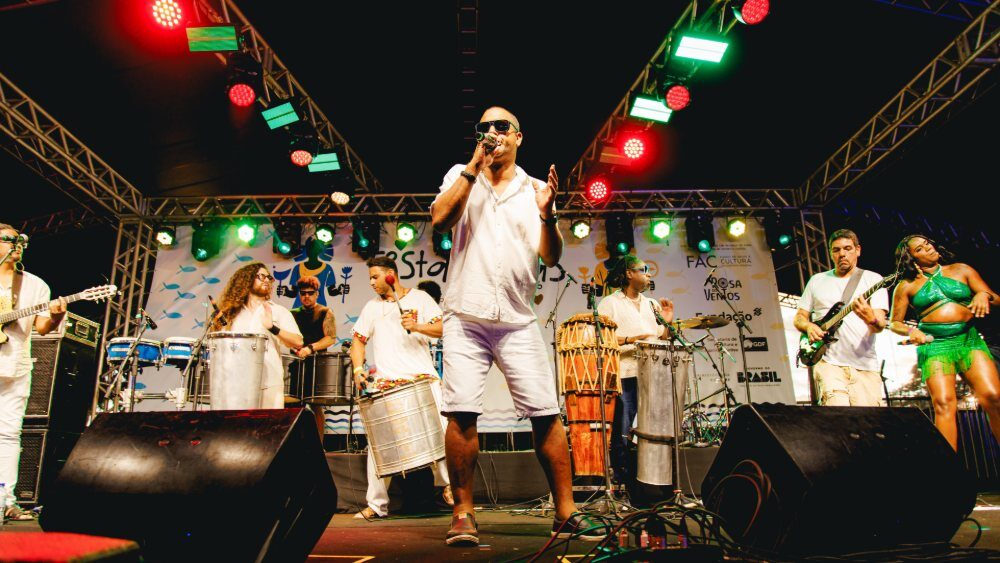
Salvador, the capital of Bahia, is the beating heart of Afro-Brazilian culture — the place where samba-reggae was born and where percussion still fills the streets. For the culturally curious traveller, the traditions here are still alive: rehearsal nights, Carnival, capoeira circles, sacred festivals, and the food and music of its old neighbourhoods.
A city built on rhythm
Founded in 1549, Salvador was the first capital of colonial Brazil and, for centuries, a centre of the Atlantic slave trade. From that painful history grew one of the richest Black cultures in the Americas. Today the city’s African heritage is everywhere — in its music, its religion, its food and its language — and nowhere more audibly than in its percussion.
Where to feel the pulse
The Pelourinho
The Pelourinho, Salvador’s colonial old town, was recognised as a UNESCO World Heritage Site in 1985 for its historic architecture. Its steep, cobbled streets are also home to the rehearsal spaces of the city’s famous blocos afro, and on certain evenings the whole quarter rings with drums. Rehearsal schedules change from season to season, so it is worth checking locally when you arrive.
Neighbourhoods
Beyond the Pelourinho, the bohemian Santo Antônio district offers viewpoints over the Bay of All Saints, while Rio Vermelho is the city’s lively hub of bars, live music and the annual offerings to the sea-goddess Iemanjá. The waterfront of the Baía de Todos os Santos frames it all.
Festivals worth planning around
- Carnival (February/March) — Salvador’s is one of the largest street parties in the world: instead of a stadium parade, trios elétricos and blocos afro lead the celebration through the city’s streets.
- Festa de Iemanjá (2 February) — a moving celebration in Rio Vermelho when the community brings flowers and gifts to the goddess of the sea.
- Lavagem do Bonfim (January) — the ritual washing of the steps of the Church of Bonfim, blending Catholic and Candomblé traditions.
Exact dates shift each year, so confirm the current calendar before you book.
Capoeira, food and everyday culture
You do not need a festival to find culture in Salvador. Open-air capoeira circles — the Afro-Brazilian art that blends martial movement, dance and music around the single-string berimbau — appear in public squares and along the waterfront. And the city’s food carries the same history: acarajé, the black-eyed-pea fritter sold by the white-clad baianas, and moqueca, a fragrant seafood stew, both with deep African roots.
Travelling respectfully and safely
Candomblé terreiros are places of worship, and being welcomed into one is a privilege: visit only if invited or accompanied by a guide, and follow the community’s customs. As in any large city, use common sense — keep valuables out of sight, favour busy, well-lit areas at night, and ask locals for current advice. A few words of Portuguese go a long way, though you will find warmth and patience almost everywhere.
Experiencing it with Opanijé
Salvador is the city where Opanijé’s cultural immersion takes place: days of hands-on percussion and living culture, guided by teachers who carry these traditions. The fullest way to understand this music is to stand inside the sound. Wherever you begin, bring curiosity and respect; Salvador does the rest.
Sources & further reading
- UNESCO — Historic Centre of Salvador de Bahia, World Heritage List (1985).
- General cultural and travel references for Salvador, Bahia.
- Crook, Larry — Brazilian Music: Northeastern Traditions and the Heartbeat of a Modern Nation.
